
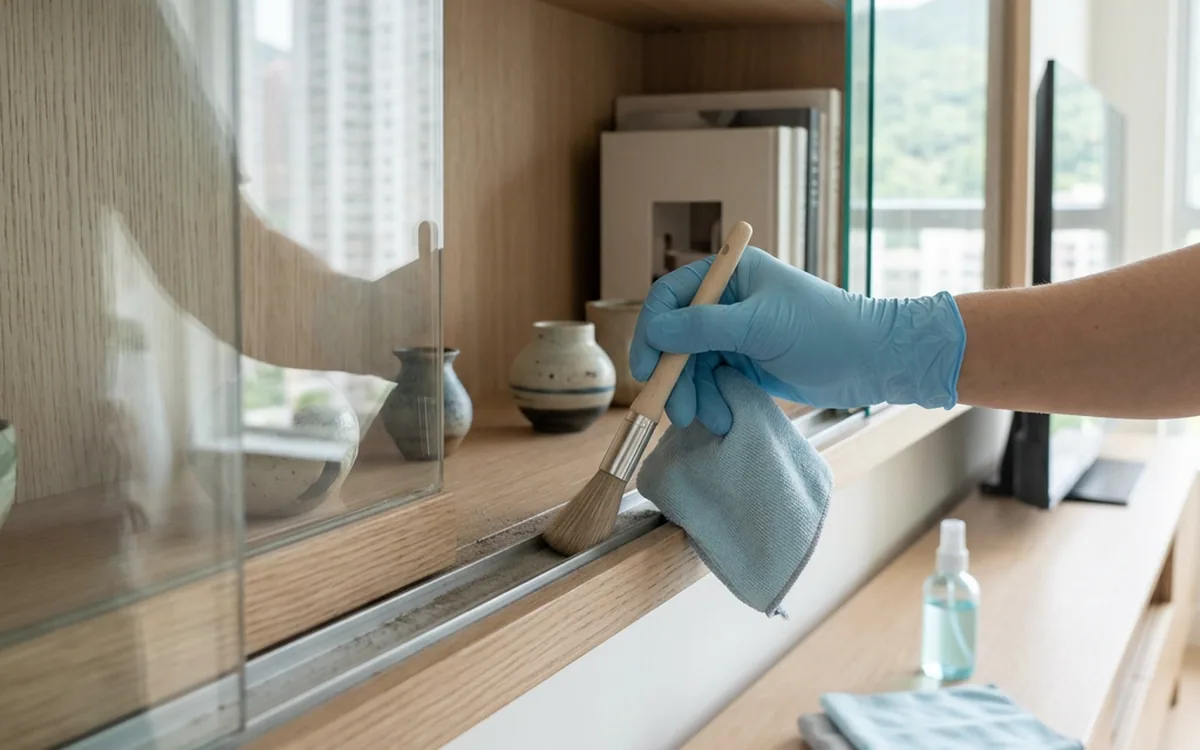
Maintenance of collection items in display cabinets lies in anti-static treatment and fine dusting. Use dust-collection tools with airflow control, combined with slightly damp high-density fiber tools, cleaning according to the collection material's grain to avoid damaging the paint finish.
Physics and Chemistry Principles of Dust Accumulation
The main cause of dust inside cabinets is the disturbance of suspended particles by air conditioning airflow, plus static electricity generated by PVC, resin, or acrylic materials in dry environments. Static electricity acts like a magnet for dust, making fine fibers firmly attached to the complex structures of collections. If dust accumulated over a long period absorbs moisture from the air, it will react with the model coating, inducing yellowing or stickiness.
Fine Dusting Operation Requirements
When handling precious collections, blindly using rough cloths will scratch the coating. Before starting, confirm the material of the item and use specialized tools for different structures. The core principle is to remove loose dust first, then perform deep treatment on the crevices.
- Assess the material of the collection first to avoid chemical solvents damaging the paint.
- Use dust collection tools with gentle airflow control to capture loose dust.
- Use soft high-density microfiber cloths with a tiny amount of distilled water to wipe gently along the grain.
- Ensure the environment is dry after cleaning to avoid moisture staying inside the cabinet.
Determining When to Stop DIY
If collection items show paint peeling, stickiness, or structural fragility (such as loose miniature components), stop cleaning immediately. If there is a huge quantity or the structure is extremely complex, DIY cleaning can easily lead to accidental damage due to fatigue; we recommend assessing whether to entrust professionals.