
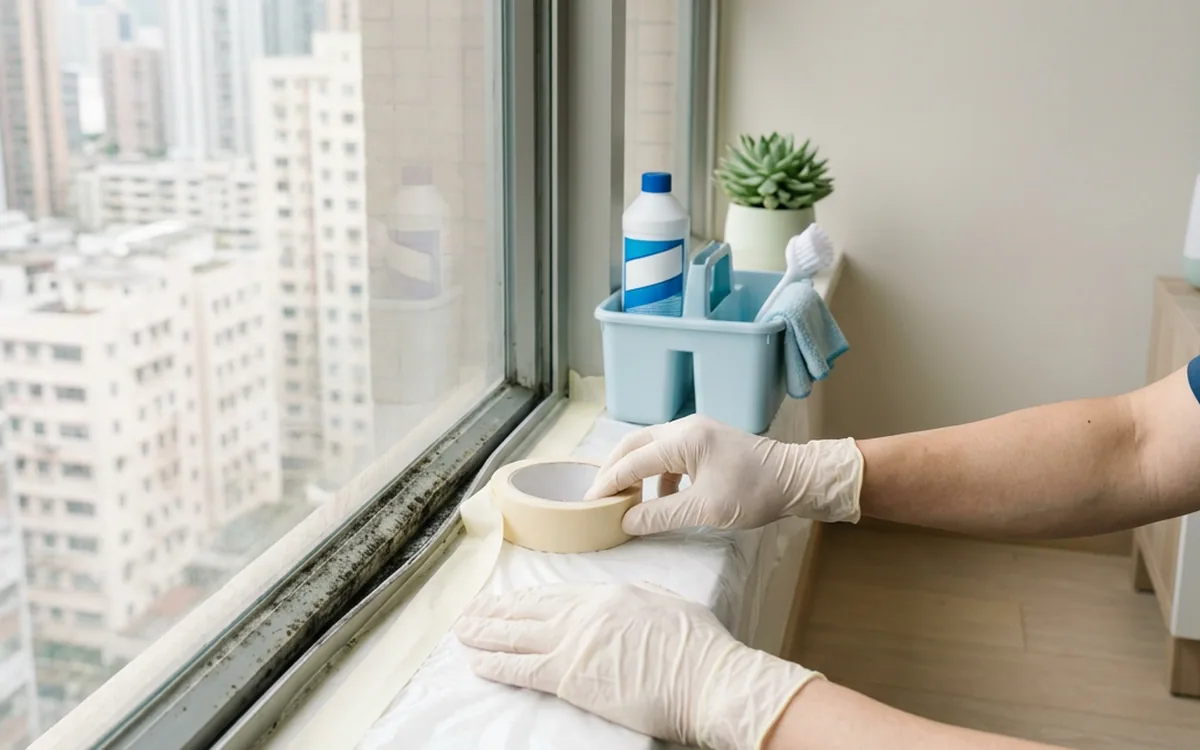
To deal with mold on window edges, you must first wear protective gloves, clean the dirt with cleaner and water, and wipe thoroughly dry. If the mold is severe, confirm whether the material is suitable for water washing before considering suitable mold removal products. The most important thing is to fix water seepage problems and increase ventilation to keep the area dry and prevent mold from regenerating.
Why window edges are prone to mold
Window edges are a breeding ground for mold, mainly due to condensation water accumulation and poor air circulation. When outdoor humidity enters the room, or temperature differences cause water vapor to condense on window frames and glass edges, mold will grow rapidly if not wiped dry in time.
When handling moldy materials, you can follow US Environmental Protection Agency's home mold prevention recommendations(opens in a new window)treatment and note the on-site and material restrictions.
Safety cleaning and material testing
Before cleaning, you must test the cleaner in an inconspicuous place to see if it will cause the material to fade or be damaged. It is strictly forbidden to mix bleach with acidic cleaners or other chemicals to avoid producing toxic gases. For porous materials (like wooden frames or wallpaper), if mold has penetrated deep inside, it may not be possible to remove it completely.
Before using bleach, please first understand Method for using bleach from the Centre for Health Protection(opens in a new window), and operate according to the product label.
- Must wear gloves and eye protection
- Avoid risky operations at heights
- Must keep the environment dry after thorough cleaning
Standard cleaning steps
Following correct procedures can improve cleaning efficiency and protect materials.
- Initial removal of surface dust and mold debris
- Wipe with a suitable cleaner, focusing on corners and crevices
- Thoroughly dry the window frame and open the window or use a fan to enhance ventilation
- Check for leaks or aging sealing glue problems; if necessary, find a professional to repair them
Long-term prevention and daily maintenance
Dehumidification is the core of preventing mold. Regularly check the sealing status of windows and remove stagnant water after use. For severe or recurring mold cases, you may need to install an exhaust fan or improve indoor air circulation.
- Avoid direct caulking before removing the mold
- Keep window frame tracks clean
- Check the anti-leak rubber strips on window edges in a timely manner
About 壹家壹清潔專家
We are committed to providing clients with high-quality cleaning solutions. If you encounter stubborn dirt that is difficult to resolve, you are welcome to contact our professional team to assess and handle it.
