
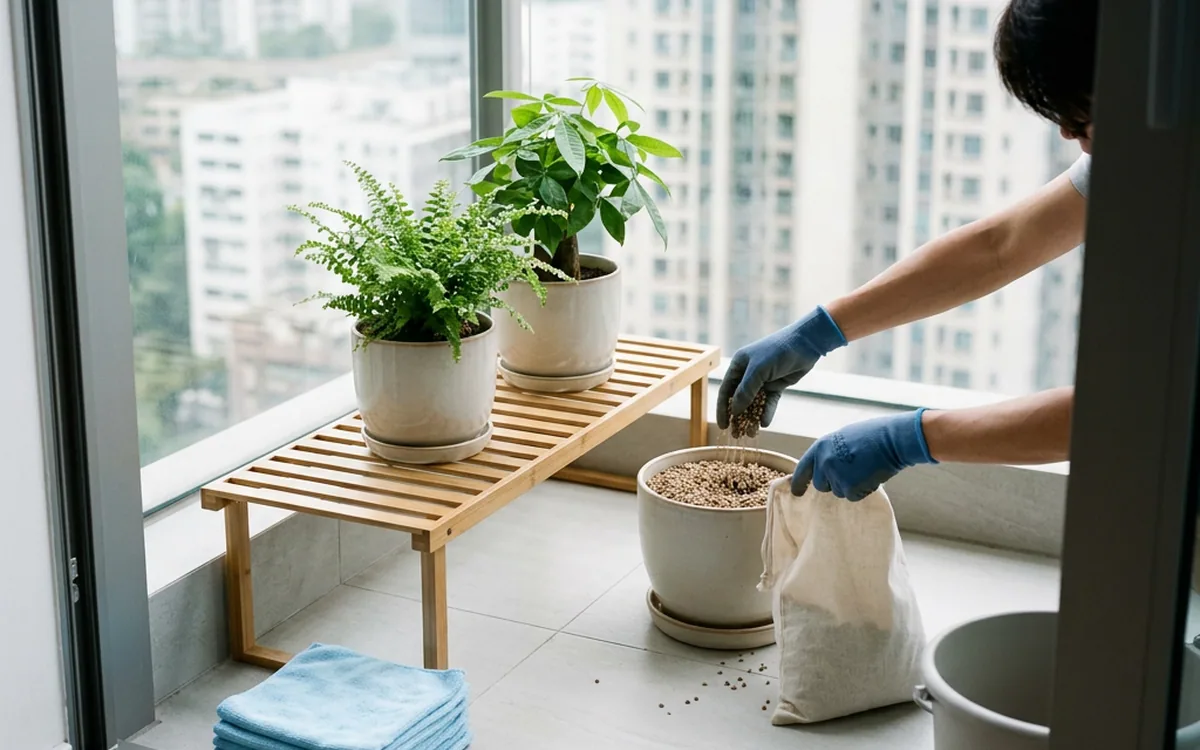
Small black flies are mostly caused by long-term damp potting soil and organic fertilizers that have not fully decomposed. Prevention depends on implementing the "see dry, see wet" watering principle, ensuring terrace ventilation, and laying inorganic covers like volcanic rock on the soil surface to block egg-laying. If the insect infestation is out of control, it is recommended to seek professional pest control services.
Cause analysis
Small insects appearing on terrace potted plants, commonly known as "fungus gnats," mostly breed in environments where potting soil is long-term damp and rich in organic matter. Overwatering, standing water in the tray, and using organic fertilizers that have not been thoroughly decomposed provide an ideal hatching bed for insect eggs.
Environmental management steps
Improving the environment is key to eradicating pest infestations. Please refer to the following operations:
- Strictly control moisture: Implement the "see dry, see wet" principle; wait for the surface soil to dry before watering, and clear standing water from trays.
- Strengthen ventilation: Maintain airflow on the terrace to accelerate moisture evaporation and reduce humidity.
- Physical blocking: Cover the soil surface with a layer of coarse sand or volcanic rock to hinder adults from contacting the soil to lay eggs.
- Clear environment: Regularly remove dead branches and fallen leaves around flower pots to reduce habitats.
When to seek professional help
If the infestation persists after taking the above measures, or if there are so many potted plants that it is impossible to thoroughly remove eggs from deep soil, it is recommended to entrust a professional pest control team for scientific assessment and biological control. Professional management can disrupt the reproductive chain from the source to avoid affecting plant health.