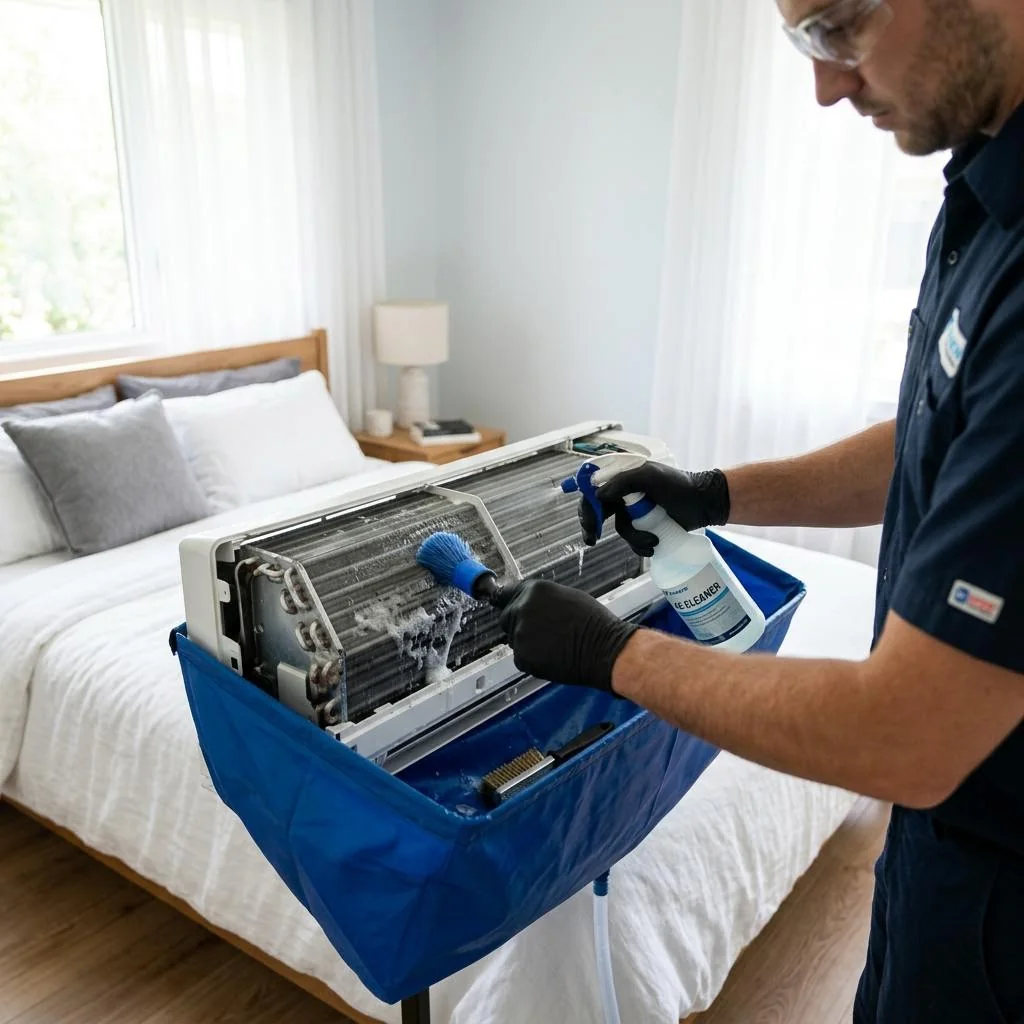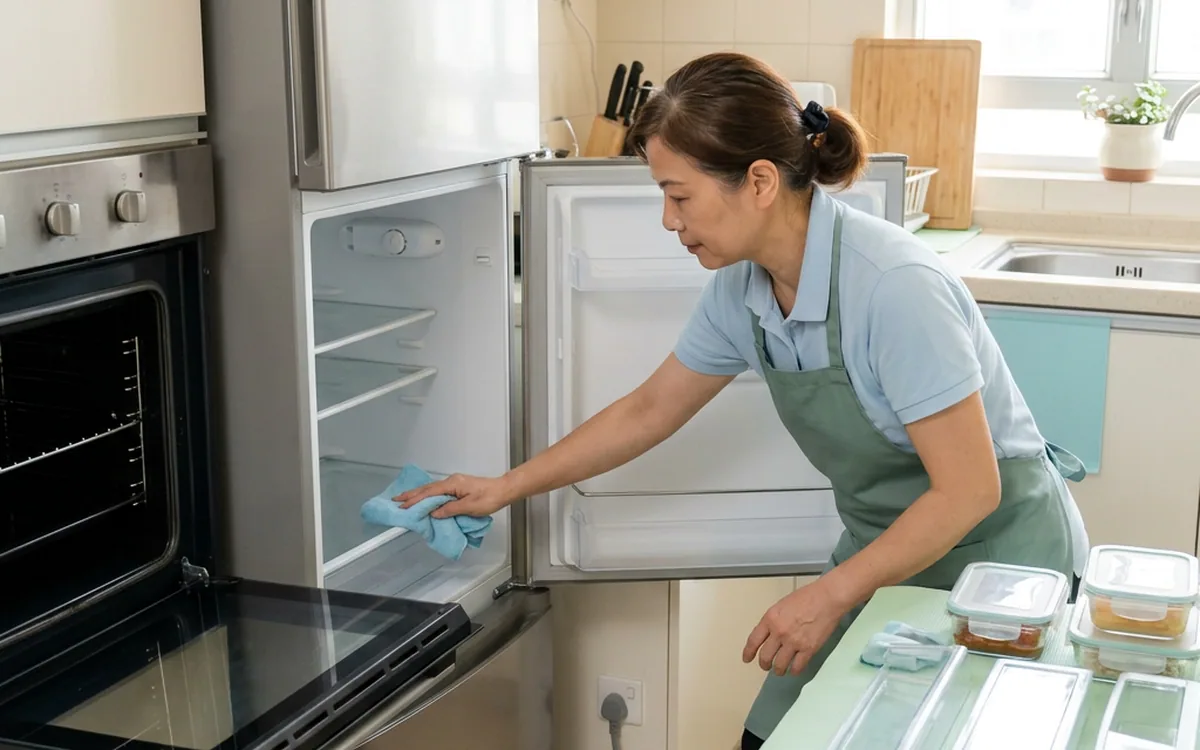
Before cleaning the refrigerator and oven, you should empty out food, complete defrosting, and disconnect power according to the manufacturer's regulations. The oven must be cleaned after it has cooled down to avoid using inappropriate products on self-cleaning coatings. After cleaning is complete, please resume use according to the machine's operating requirements. If there are still abnormalities, repairs should be arranged; they cannot be resolved through repeated cleaning.
How should refrigerator food be arranged in advance?
First, take stock of the food and items that need to be kept refrigerated, and arrange another suitable place for cold storage. Do not wait for the team to arrive before you start dealing with large amounts of food, and do not use cleaning time as an excuse for food being left at room temperature arbitrarily.
If there are items with medical or special storage requirements, arrange them according to professional instructions; do not let cleaning staff judge preservation safety.
Can a knife or hot water be used to clear ice faster?
Do not use a knife to chip ice or use high-temperature methods that do not meet the manufacturer's requirements for rapid defrosting, as this may damage the inner walls and pipes. Whether defrosting is needed, how to shut down, and when to restart should be followed according to the model's manual.
- Arrange food and water collection points first
- Protect the floor from being soaked by meltwater
- Do not forcibly pry open stuck parts
- Record existing cracks and door seal problems
What surface limitations do ovens have?
Self-cleaning, catalytic, or other special inner walls cannot be treated with strong alkalis or abrasive tools. Check the manufacturer's specified method first, and some accessories are not suitable for self-cleaning programs.
Cleaning liquid cannot be sprayed directly onto heating elements, fans, circuits, and places that should not get wet. Cleaning and dismantling/repairing are not the same job.
How should the cleaning scope be verified?
Separate the inner cavity, racks, door seals, glass, and non-removable parts; this can avoid the booking being understood simply as "washing one unit".
| Appliance | Confirmation before cleaning |
|---|---|
| Refrigerator | Emptying, defrosting, racks, door seals, and drainage location |
| Oven | Inner wall coating, grill, door glass, and fan location |
| Common to both | Model, existing malfunctions, removable parts, and power arrangements |
When can it be used again after completion?
First confirm that touchable parts are clean, dry, and reinstalled as required, and complete the necessary clean water wiping according to the product label. Restarting and use should follow manufacturer instructions; do not apply a fixed waiting time.
If there is still a burnt smell, abnormal temperature, water leakage, or error messages, it should be deactivated and repairs arranged, and not resolved by continuing to clean.