Kitchen degreasing requires removing food and tableware first, ensuring electrical appliances are disconnected and cooled before proceeding. Degreasing products should be left on according to the label; never mix acidic and alkaline cleaning agents. For sensitive materials such as aluminum, wood, and stone, you must perform a small-scale test first and wipe away residues with clean water after cleaning to ensure safety.
What needs to be moved away before degreasing?
Food cutting boards, small electrical appliances, and unsealed tableware should be removed or properly covered first. After the cooking stove has cooled, handle the power or stove components according to the manufacturer's instructions; do not spray cleaning agents on hot surfaces.
- Keep ventilation and wear appropriate gloves
- Keep cleaning supplies and food stored separately
- Protect sockets and places that should not get wet
- Confirm materials for countertops, oil nets, and cabinet doors
How should thick grease be handled step-by-step?
Use soft tools to remove loose residue and thick oil layers first, avoiding pushing grease into seams. Degreasing products are not the more concentrated the better; concentration and duration should follow the label.
- Start from high cabinet surfaces and walls
- Test products in inconspicuous areas
- Soften grease according to the label and wipe lightly
- Use a clean cloth to remove residue
- Wipe with clean water and dry according to material requirements
- Handle the floor last and check if it is slippery
What limitations do different materials have?
The same cleaning agent may not be suitable for the entire kitchen. Aluminum, coatings, wood, and natural stone may all be sensitive to acid, alkali, or moisture.
| Materials | Practices to avoid |
|---|---|
| Aluminum oil nets | Soaking in strong alkali for a long time without confirmation |
| Wooden cabinets and seams | Soaking with large amounts of water or letting water stay for a long time |
| Natural stone | Using acidic descaling products at will |
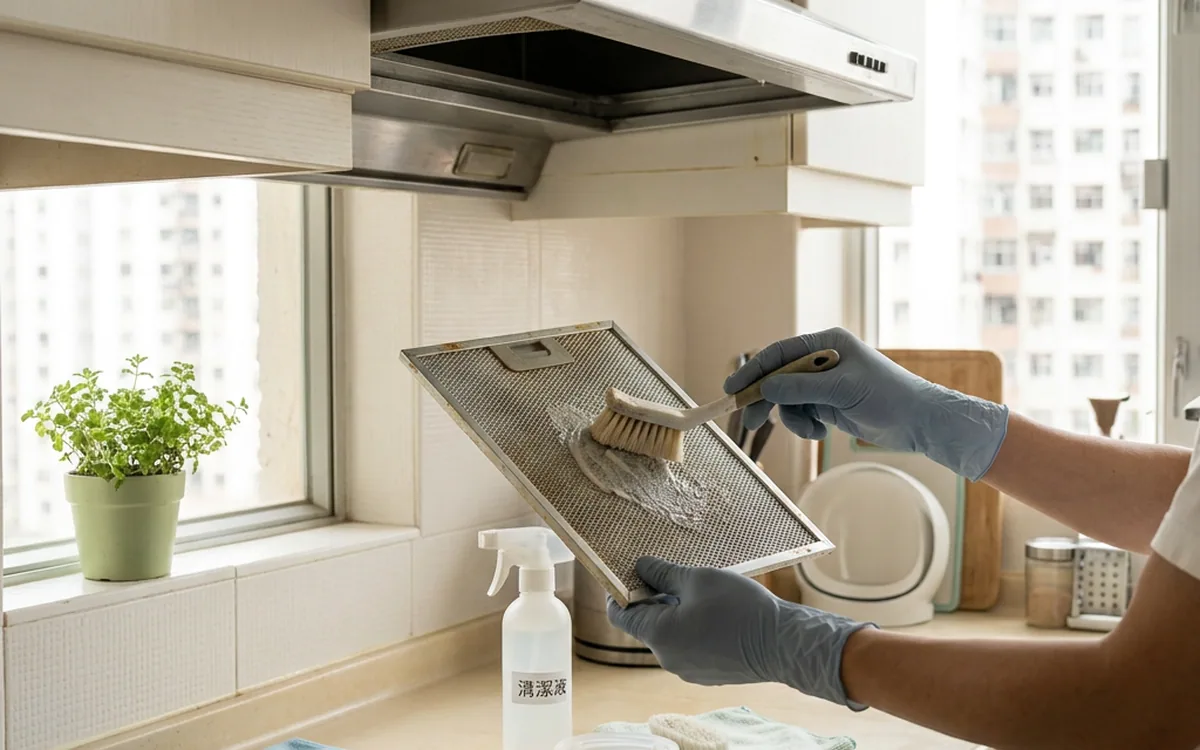
| Stainless steel and coatings | Using hard brushes to scrub horizontally with force |
| Circuits and motors | Directly spraying water or cleaning liquid |
What is the difference between range hood shell cleaning and internal cleaning?
Wiping the shell and cleaning removable oil cups is not the same as dismantling the fan wheel, interior, and motor surroundings. Before booking, list the model, installation height, component aging, and whether it can be dismantled.
Continuous abnormal noise, burnt smell, or efficiency problems may require inspection and repair; it cannot be guaranteed that washing away grease will fix the malfunction.
Why can't cleaning agents be mixed?
The Centre for Health Protection reminds you not to mix bleach with other household cleaning agents, especially since acidic products may generate dangerous gas. Cleaning and disinfection should be judged separately and used according to product labels.
If strong irritation, coughing, or discomfort occurs after use, leave the affected space first and seek help; do not continue to try adding another product to neutralize it.
Before using bleach, please first understand Method for using bleach from the Centre for Health Protection(opens in a new window), and operate according to the product label.