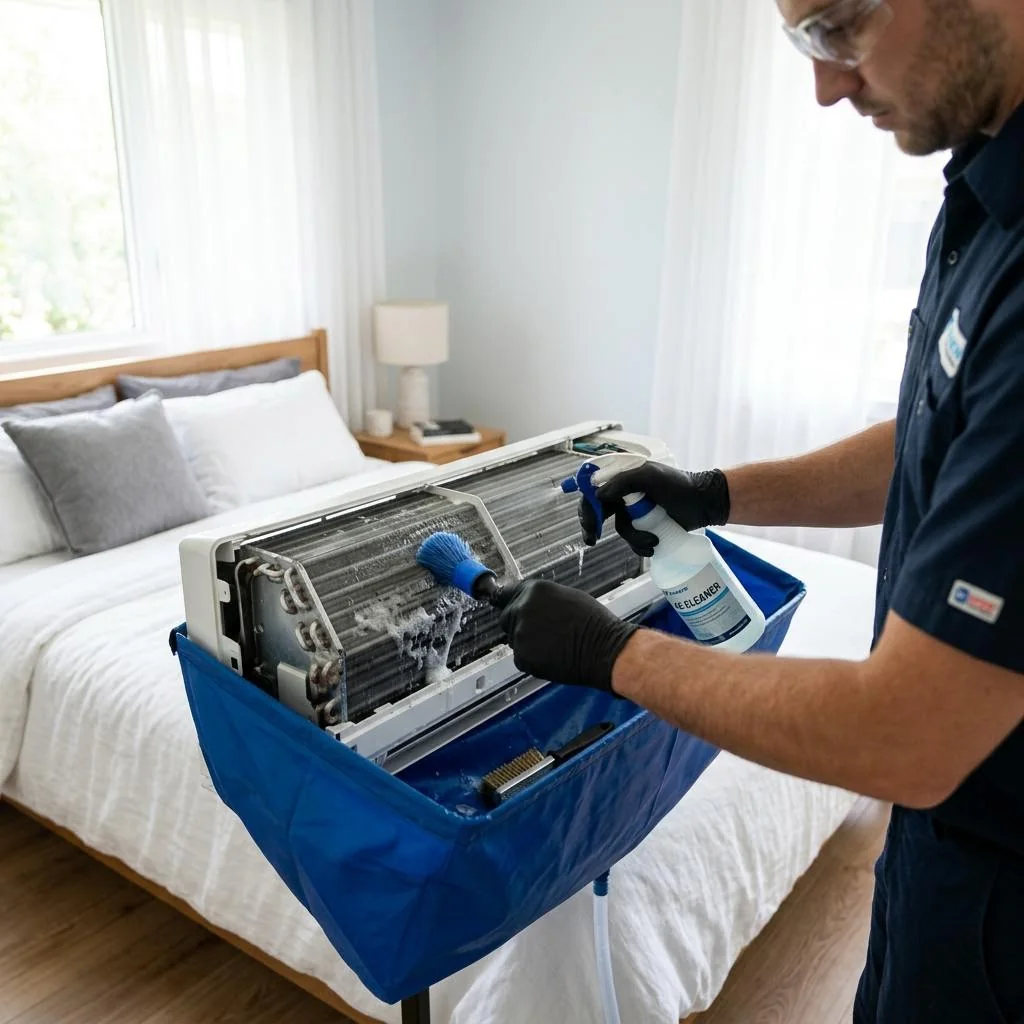
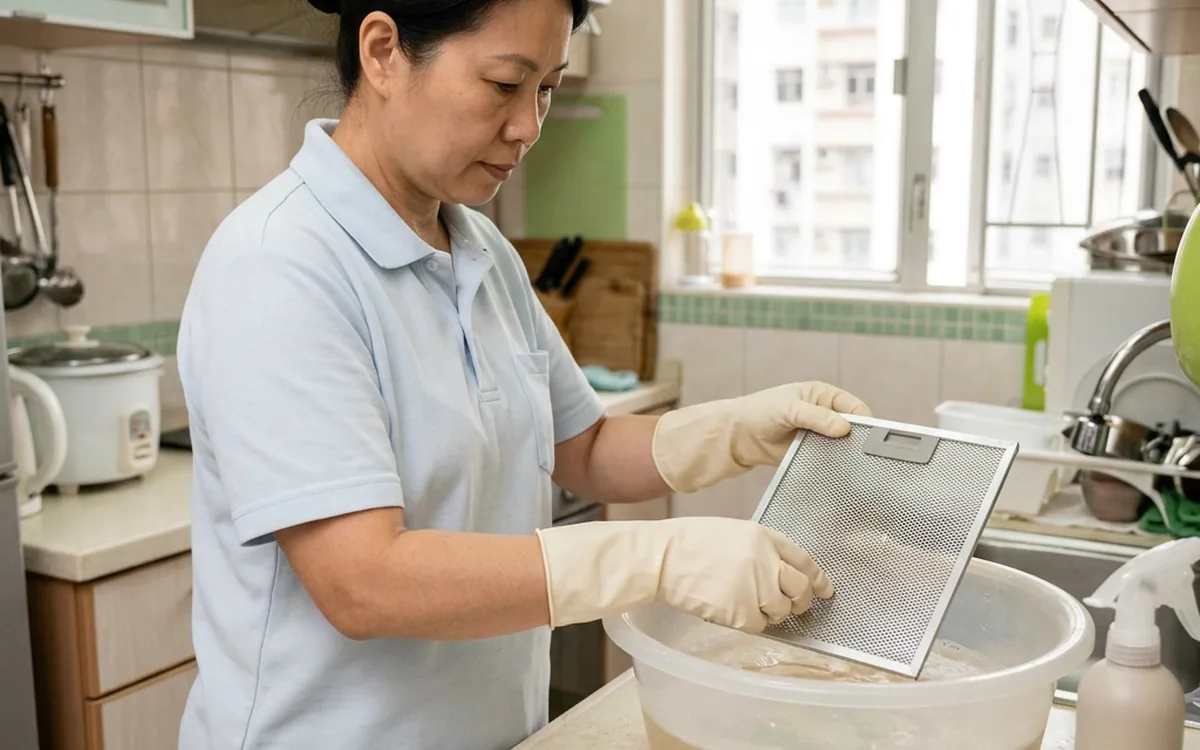
Range hood cleaning must be performed according to the manufacturer's instructions after power is off and the unit has cooled. Grease filters and cups can be cleaned according to guidelines, but internal deep cleaning involving the blower or motor must be assessed by 壹家壹清潔專家 according to the specific model structure. Do not spray range hood degreaser directly into circuits or the motor, and do not soak aluminum parts in strong alkali for a long time.
Which parts can be maintained daily?
The grease filters, oil cups, and shell surfaces specified by the original manufacturer as detachable can usually be maintained according to instructions, but latch designs and materials vary by model. Do not pull forcibly as a substitute for reading the instructions.
Carefully collect and dispose of the liquid inside oil cups first; do not arbitrarily pour thick oil directly into drains. Avoid cutting yourself or letting parts fall during cleaning.
Can grease filters be soaked in strong alkali overnight?
Do not extend soaking time on your own. Aluminum, surface coatings, and different metals may be damaged; discoloration does not necessarily mean there was more dirt originally.
| Location | Treatment principles |
|---|---|
| Grease filters | Confirm material, products, and soaking time |
| Oil cup | Pour out grease first, then clean according to instructions |
| Shell | Use soft tools and avoid liquid getting into circuits |
| Internal blower | Confirm disassembly scope and condition first |
What photos should be provided when booking deep cleaning?
Take photos of the full unit, model, and installation location, especially the seams with kitchen cabinets, the top of the machine, and nearby power supply. Just photographing the grease filter cannot determine whether the whole machine can be disassembled.
- Model and age data
- Full panoramic view of front and both sides
- Close-ups of thick grease and hard-to-dismantle locations
- Existing strange noises, burnt smells, or switch issues
- Existing rust, cracks, and missing parts
What is the reasonable process for the day of cleaning?
Confirm safe operation and existing issues first, protect the stove and nearby items, then clean within the feasible scope. Not all models can be completely disassembled.
- Clear the stove surface and food items
- Confirm power cutoff and protection scope
- Handle detachable parts according to the model
- Remove residues and dry according to product requirements
- Check operation and the site after reassembly
What should I do if it still extracts slowly after washing?
Exhaust pipes, installation, motor, and user settings can all affect ventilation. If it remains abnormal after cleaning, arrange for repairs; do not keep adding cleaner or dismantling circuits yourself.
Retain a record of the scope of treated parts so maintenance personnel can understand the situation later.